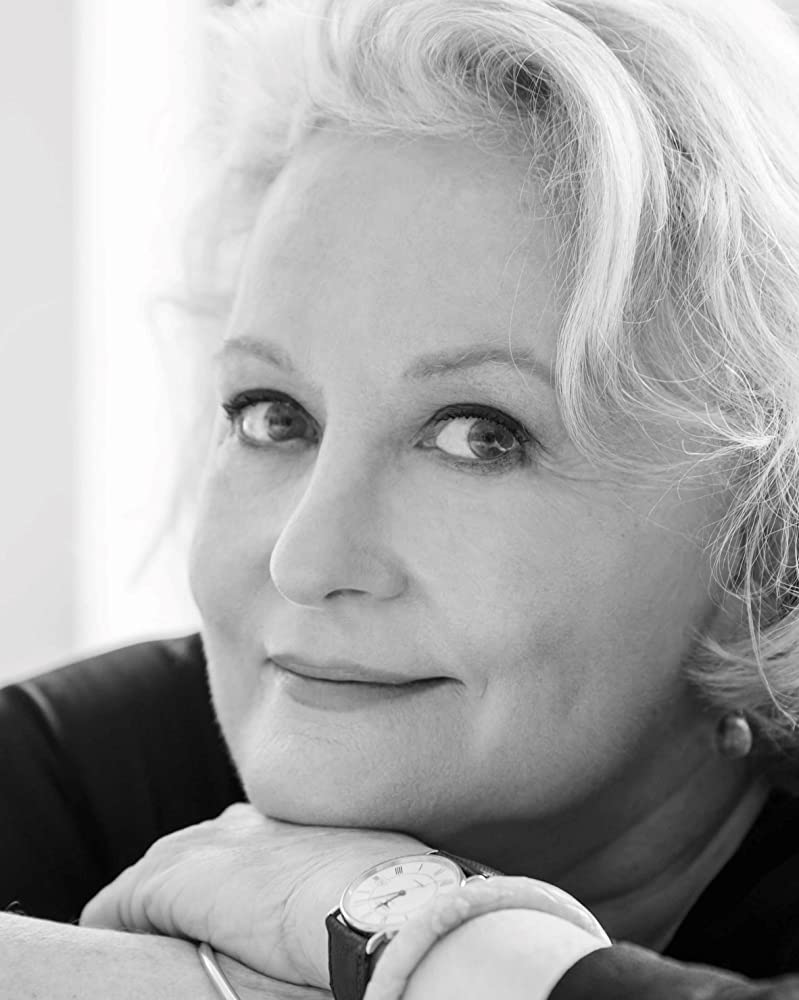
Kate Fitzpatrick: NIDA Audition Fails, Patrick White, & Dining with the Queen | Ep 47

 Apple Podcasts
 Spotify
 RSS Feed
 Episode 47: The Icon Series – Kate Fitzpatrick
In this landmark episode, Max & Sam are joined by a true legend of the Australian stage and screen, Kate Fitzpatrick. With a career that spans the golden era of Australian theatre to the bright lights of Hollywood, Kate offers a masterclass in longevity, artistic integrity, and the grit required to sustain a lifelong career in the arts.
Key Highlights
- The Patrick White Connection: Kate discusses her profound creative partnership with Nobel Prize winner Patrick White and the experience of having the play Big Toys written specifically for her.
- The Hollywood Glimpse: A look back at Kate's time in Los Angeles, including a rare and fascinating encounter with the iconic Marilyn Monroe.
- The Craft of Longevity: Insights into how the industry has evolved and why resilience remains the most important tool in an actor's kit.
- Navigating the Industry: Advice on maintaining your "actor’s spirit" and staying true to your creative voice amidst the noise of the business.
About the Guest
Kate Fitzpatrick is one of Australia’s most distinguished actors. Her extensive credits include seminal works with the Sydney Theatre Company and the Old Tote Theatre, as well as memorable roles in film and television. Beyond her acting, she is an accomplished author and was the world's first female cricket commentator, proving that a creative life knows no boundaries.
Memorable Quotes
"You have to have a certain amount of tenacity, but you also have to keep your soul intact. The industry can be loud, but your craft should be your anchor."
"Working with Patrick White wasn't just about the lines; it was about understanding the weight of the silence between them."
🎬 Key Topics & Timestamps:
• [00:00:00] - Introducing Kate Fitzpatrick
• [00:03:03] – Literally "falling" into the industry: Kate’s unforgettable NIDA audition.
• [00:06:54] – Working on The Removalists with Jackie Weaver.
• [00:10:00] – Memories of Something in the Air and working with Eric Bana.
• [00:14:26] – Acting tips: How Kate stays fresh on stage and her "silent scream" technique.
• [00:24:55] – Researching Marilyn Monroe and finding the "way in" to a character.
• [00:28:08] – Navigating career "road bumps," from health crises to losing jobs due to pregnancy.
• [00:36:43] – Her deep friendship and creative collaboration with Patrick White.
• [00:41:14] – The infamous story of sneaking onto the Queen’s yacht and the fallout.
• [00:47:19] – Closing thoughts and advice for the next generation of actors.
Resources & Links
- Follow Kate Fitzpatrick: Kate's IMDb
- Two Unemployed Actors Website: Episode Website
- Subscribe on YouTube: Two Unemployed Actors Channel
Enjoyed this episode? If you found value in Kate’s wisdom, please leave us a review on Apple Podcasts or Spotify. Your support helps us continue to bring you conversations with the industry's best.

INTRO: 00:01
Two one polices. Two one and pull actors. They're just between projects.
MAX: 00:12
Welcome back to two unemployed actors. I'm Max.
MAX: 00:14
I'm Sam. And we have a special guest today, Kate Fitzpatrick. Hello.
KATE: 00:18
Hello.
MAX: 00:19
Welcome. Thank you for making the time to uh spend time with two unemployed actors because we're just between projects.
KATE: 00:25
Three unemployed actors everyone. I mean COVID times.
MAX: 00:28
I'm confident there's more than three, so we're certainly not alone.
KATE: 00:32
Indeed.
MAX: 00:34
I've had a few tiny corporate jobs the other last couple of weeks. So I was happy to be back on set in front of a camera.
KATE: 00:41
So lucky.
MAX: 00:42
I know, I know, reading from a teleprompter. Making um cleaning sound really exciting.
KATE: 00:47
Well yeah. I reckon if you're doing it for money, you can make anything.
MAX: 00:51
I know, I know, I know, I know. Yeah, exactly. Uh because I'm not getting the same scripts as De Niro just yet, so you know I've got to make life insurance and cleaning and it we can. It is great.
SAM: 01:01
It is great to be back on set. It yes. I did a couple, I did a very, very small kind of extra role, but in I don't know if you've heard the film Ruby's Choice. It's a new Aussie one here with Jane Seymour.
KATE: 01:11
Oh, yeah.
SAM: 01:12
So I did like a little extra thing with that. But it's great, even like I don't generally do extra roles, but it's great just to be back on set. I'm not convinced.
MAX: 01:19
I think you might have just been stalking the set trying to get away from the state.
KATE: 01:22
That's why I wouldn't give him monkeys. No, I'd yeah, exactly. I'd do it, I'd do it, I do it. But it's it's great.
MAX: 01:28
Did you when you when you first started, did you do any of that sort of stuff? Like while you were at NIDA or after or I I was kind of very lucky very early. Really?
KATE: 01:37
Yeah.
SAM: 01:38
Yeah, you got into NIDA 18, was it?
KATE: 01:40
Yeah, 18. And so I was working kind of full-time when I was like before I was 21. So fantastic. I know. I was I was lucky.
MAX: 01:50
Did you did you know at NIDA w what sort of where you wanted to gravitate more towards the stage or something? That's gonna pass.
KATE: 01:57
Oh really? Good lord. I thought I'd be a stage actress, but but we had done um because that's mostly what we did. But we did make a funny little film while we were there, and uh I re I remember really enjoying it, but it was we shot it in the in the science department of New South Wales Union and they put marks on the floors so that the camera was static. Well, a bit like ours. Bit like ours, yeah. So you'd move forward to a close up and off to the left and off to the right, and they shot it like that. Okay. And it actually looked all right, funny enough. Uh John Clark did it. Right.
MAX: 02:32
That was my first uh your introduction to the screen.
KATE: 02:35
And when I saw myself on the back wall of the of old tote, you know, my head sort of, I don't know, 20 foot. I was horrified.
MAX: 02:44
We're quite prepared for that.
KATE: 02:45
And hair like this. Damn it, there's a few more weeks' therapy. Because this is my real hair, you see. So there was this all this wild kind of you know, massive, massive, and I thought, oh my god, that's revolving.
SAM: 02:59
I'm sure it was. Did you get into NIDA first try, first audition you got?
MAX: 03:03
Yeah, and I fell down the stairs into my audition, but not getting enough attention Possibly.
KATE: 03:10
Possibly. It was they it was a theatre in the round in in Adelaide and and uh you had to walk down to it, but it was tripped and fell actually fell onto the stage. You've certainly everyone saw it?
SAM: 03:23
Yeah.
KATE: 03:24
Oh my god, amazing.
MAX: 03:25
Well that doesn't count unless you, you know, being an actor, unless you've made a dramatic.
SAM: 03:28
It seems so sincere. Yes. So let's just so clumsy.
MAX: 03:34
Clumsy trying to get a stunt credit on IMTV.
KATE: 03:39
Stunt credit. It was pathetic, but I got in. I couldn't believe I got in. And I was amazed I got back. I I remember at the end of first year they um they did a play and they cast me as Mummy in the American Dream. Right. And uh I was living with a girl who used to. She looked as if she'd been split by an axe. Oh dear. That is unfortunate. She had very long hair that had a a center parting. Oh yeah. And she had a little cleft in the end of her nose, and she always wore a low thing. And she wore very sexy clothes, which I did not. And mummy, I thought, mommy, I thought, ought to have some. So I I smoked a cigarette and I wore her cloth.
MAX: 04:18
Oh drinking problems, sorry.
KATE: 04:22
Edit that out, yes indeed. So I borrowed her clothes and I had a real cigarette, and um somehow I got back in. I think they were so shocked because they'd always cast me as the sort of the sweetie or the conservative sweetie sort of thing. Yeah, and I was this wild sort of I mean it's really blatantly horrible, loud, awful, and that's wonderful. I had fun. That's wonderful. So I got back, but so that was a surprise. And then I and also I had made great friends like Rex Cramporn, who you know I started working with almost straight out of NIDA. So and Jim Shaman was there, he he had left, but he was directing things. Okay. So all of those people I'm working with a lot were there.
MAX: 05:05
So what a fantastic introduction to the industry.
KATE: 05:14
I um I was living in a flat with an old woman in Ramwick, that some I think priest of the family in Adelaide, who's a great aunt, or something like that. And every morning I used to walk down High Street with this very, you know, kind of wither sort of young man, didn't say much, long-haired, kind of trendy sort of person. And he used to ask, he asked me the odd question about Nider, what do you think? And I go blah blah blah, and he, what do you think of the tutors? And I just talk, you know. And so we got right down to the end of uh he used to disappear just before the gate. Every morning though, five days a week.
MAX: 05:54
Only sounds slightly suspicious, right?
KATE: 05:56
Well it was sort of, and I didn't think anything of it until one day I walked into mid-tote, which was halfway between that, and there he was sitting behind a desk. And I went, like that. This is after months, and I ran downstairs and I said, Who's that? And they said, Oh, Jim Jarm. And I said, Who's he? And I said, Oh, you know, he's he's done the director's course and he's out now, and he's just doing a bit of and I went, so then I avoided him.
MAX: 06:18
Trying to replay what you'd said to him all those times.
KATE: 06:20
I said, You know, you name it Adelaide Blabber, you know, boom, I told him. Good on you, and um, no filter at all. And then the next thing that happened was that I was understudying Jackie Weaver in a plaque. So we used to do all the understudying at the old hoad, and we used to do the um the coffee at interval and the programmes and sell the tickets and everything, and the classes. I mean and we weren't paid, it was it was absolute slave.
MAX: 06:49
Com commitment to the industry.
KATE: 06:50
Well, talking about the bit parts, you know.
SAM: 06:52
Yeah, talking about projects with Jackie Weaver, you did The Removalists. Yeah. Was that that was one of your first films that you did, was it? Yeah, yeah, it was. Yeah, because I I studied it in school and and I I realize now that you were in it, and it's awesome. I never passed. I never passed. I'm an actor, I don't pass stuff.
KATE: 07:07
Just do don't pass.
SAM: 07:08
But yeah, so that was one of your first films, wasn't it?
KATE: 07:10
Yeah, it was. Well and I met her first by well, she I didn't actually meet her because she was sick. Yeah, but they put her about six inches on the bottom of one of her dresses and because she's very little, yeah. And we um and I went on for a a couple of nights, and as a result, we became friends, so yeah, so and then we did the removalists and uh a few other things. Okay.
MAX: 07:36
But some and and auditioning, were you were you a prolific auditioner at the time?
KATE: 07:41
Very bad and hardly ever uh the first uh real audition I ever did was age 40 in London. Really?
MAX: 07:49
Wow.
KATE: 07:50
I know it's shocking. So for and I was really, really bad at it. Oh really? Because you were you if you're not used to it, but it's not a good idea. Well, so for everything else before, what sort of project to project?
MAX: 08:00
A great circle to to graduate into from NIDA, certainly.
SAM: 08:04
Is that because of NIDA you got offered all the stuff?
KATE: 08:06
Well I met as I said, I Rex with whom I did something like 30 plays or 25 plays or something, and two little films. And Jim Sharman, I did uh a couple of musicals, a couple of plays. We opened the Surpany Opera into the opera house.
SAM: 08:24
Yeah, right.
KATE: 08:25
And um and that was a wonderful Brian Thompson designed it. And I did the Rocky Horror Show, of course, with Jim. And I did a couple of movies with him, and I did um Big Toys, was a play that Patrick White wrote for me. He directed that. And he and he directed Season at Sasparella at the opera house, which was a a wonderful some fantastic opportunities to learn. Yeah, I mean, um see, and that's only two guys who virtually, you know, gave me years of work, so I was very lucky. Yeah because I'm a uh oh yes, Dodger.
SAM: 08:58
Also, you're in H2O Just Ed Water, which was one of my favourite shows for a while. When I was younger, it's a little secret that I have. Yeah, I yeah.
KATE: 09:07
I love doing that. That's very cool. It was when I was living in Queenstown for a bit. Yeah. And uh the girls were sweet, I like I like them. I wanted to be a mermaid though. I'd as a doctor. They didn't allow you to do that. I said, couldn't you, you know, if you added water to it, maybe you have a tail.
MAX: 09:23
If only that'll be a pot twist. Um so to go from projects like that to to things like to opportunities like you were on a few episodes of neighbours. And we're talking your opposite shoot fast, multiple cameras at once and Well, I'd done a bit of that. Right.
KATE: 09:39
But I'd never I'd never done neighbours and I'd never done uh an Aussie soap, but I'd done a bit of you know uh uh l television.
MAX: 09:48
Okay. We've got to move a bit quicker and yeah, be all over your stuff. Yeah, yeah, yeah.
KATE: 09:53
Oh no, that that wasn't a problem. I'd done quite a bit of that. Okay. But um I I did a wonderful series uh called Something in the Air. Did you ever see that?
MAX: 10:02
No.
KATE: 10:03
Well that was um that was an ABC series that had Eric Banner and all sorts of wonderful people in it. People who went on to I mean, they were kind of big then, but he just actually made um Chopper.
MAX: 10:17
Right, yeah, he's a massive great man.
KATE: 10:20
And he said, Oh come and I'm gonna show you anything. Oh, I said I don't think we're gonna show you. No, it was amazing, wasn't it? Fantastic. Brilliant in it. And he's such a lovely man and had the most marvellous cast this uh but the ABC did one of those changes of the head of the ABC, and as a result of that it kind of got slung because it was commissioned by somebody else.
SAM: 10:43
So just jumping back to NIDA real quick, um, I've heard so many different like mixed ideas about NIDA, maybe not back then, but maybe now. What have you been back since since you've left? And what do you think?
KATE: 10:54
I've been in the building. Yeah, yeah. You know what I mean? Yeah, right. But not I was on the board for for quite a f uh a few terms. Yeah. And um I don't think they liked me on the board very much. I I'm not sure. The students did.
MAX: 11:08
Is it the Adelaide Unfilter again?
KATE: 11:10
Or is that the It was a bit it was a bit of that.
MAX: 11:12
Sometimes people don't like to know exactly what people think.
KATE: 11:16
I remember there being a discussion at um on one board meeting. The one I got on best with was a professor of engineering, I think he was, who was who was the New South Wales uh university representative. And I was the ex-student, you know, one they always have an ex-student. And uh but the thing was I was writing speeches for the this the arts minister at the time, and I think they thought that I'd be able to get them more money.
MAX: 11:42
And that was our contact on the inside completely wrong. Didn't you tell him that you actually don't vote for the party that you've got to do?
KATE: 11:49
Yeah, yeah, when I met him to get the job, he um as he held my hand, I said, I have to tell you I have never voted for the Liberal Party.
MAX: 11:57
Maybe their hopes are a little too high then that you're gonna come back with a bag of cash.
KATE: 12:00
I know, but he said he said no actor of your generation has ever voted for the Liberal Party. That was he's very cool and really smart, you know.
MAX: 12:07
Realistic.
KATE: 12:07
And and terrific arts minister. Okay. And as opposed to not having one at all.
MAX: 12:12
Well which is our current situation. What's a roads minister or something, I think.
KATE: 12:16
Uh infrastructure and um Well, he's he's got about seven, eight briefs, none of them say arts. Not not one.
MAX: 12:23
It's shocking, isn't it?
KATE: 12:24
Yeah. So anyway, he he I did get that job and I was at the at NIDA board. And one of the they used to have a student observer, and he was there one day when when somebody else said, Oh my god, you know that um some people who've been here for three years and didn't graduate are saying they're graduates of NIDA. I said, You can do three years here and not graduate. They said I said, What? I said, that's in ridiculous. Surely you know if they're any good, you know, at the end of year the second year. You want to hope. You know, you I think if they get into third year, you've got to pass them.
SAM: 12:57
Yeah.
KATE: 12:58
And uh anyway, so so we had this kind of to and fro about it. And they said, Well, it's terrible. I said, Well, you could always brand them, I suppose, couldn't you? I said, give them a tattoo. Brand them. Almost made it.
SAM: 13:08
Just NIDA, yeah.
KATE: 13:09
NIDA, right across here.
SAM: 13:10
Well, they get you get given mugs, don't you? Mugs and pens and everything. There was a guy I did a musical with, I did three weeks in spring, which was at the State Theatre. It was a very fun one, but the lead went to NIDA, uh, one-year musical theatre course. And he'd be he'd walk around rehearsal with his NIDA mug. A lot of times. Oh, bless him. So, did you go to NIDA? We didn't know.
KATE: 13:30
I had NIDA mugs, I didn't know that. Yeah, coffee tastes better.
SAM: 13:34
You get given souvenirs souvenirs now, probably t-shirts. Sweeter. You don't get a degree anymore, you just get the t-shirt. It's an expensive t-shirt. Gave us nothing.
KATE: 13:44
No, zero. Wow, that's a is amazing. Anyway, I was invited to the students' Christmas party as a result of my um they thought I was kind of funny. A good representation for them.
MAX: 13:57
So that's really the only your political leaning at night of briefly.
KATE: 14:03
Yes. Yes. Over about three years, and that was a long time ago, you know.
MAX: 14:08
Yes. Well, some up-and-coming actor questions. Things that that that we might struggle with. I know. This is. This is the testing, testing part, no. Um sometimes uh but it comes to working in the theatre and you've got to be in in character obviously night after night, you know, to eight shows a week. Yeah. Um what sort of tips and tricks do you use? What do you lean to to help you keep fresh in your in your delivery every night?
KATE: 14:31
Uh well, I don't drink and stuff before the show. Okay. That's awesome.
MAX: 14:36
Just during.
KATE: 14:39
No drinking, no drugs before I go on stage, you know what I mean? So stay fresh. Stay fresh. Yes. And um and I mean, funnily enough, in uh I've done a lot of period costume where they we had tiny courses and you can't actually eat after lunch, so that also eating, but that's not true. I do eat sometimes. And I don't like uh extremely chatty dressing room. I don't mind a bit. Well, sort of, because you think I think about stuff a lot. Right. Sure. And then I've got this funny thing that I do in the wings.
MAX: 15:14
Okay.
KATE: 15:14
And that's it, you actually tense every bit of yourself.
MAX: 15:17
Right.
KATE: 15:19
Like that. And then you let it go. So you walk on. It's like screaming silently, sort of thing. Cool. Wow. And it kind of makes you um a bit freer and relaxed as you walk on. Okay. And also because there's someone else, it never worries me. I love being on stage. I I don't like uh I don't like this. I don't like thank you for watching and listening.
MAX: 15:39
The shortest interview. No, that's that's fair enough.
SAM: 15:42
I mean and I hate being interviewed on television. Right.
KATE: 15:44
And I hate that I loathe it.
SAM: 15:46
To be fair enough, like I me too. I mean, I feel more if I have to go up and do a speech or something, like in school when I had to go up to do a speech, as me, I had to uh like I felt more nervous than when I was in character. Like a character's almost like uh it's a shield.
KATE: 16:00
Yeah, yeah. You're wearing someone else's clothes. Exactly. Someone else's you know what I mean.
SAM: 16:04
Thought actors can be the most shy and nervous people.
MAX: 16:07
I did 20 years of corporate in-between acting, so I can talk and it was sales too.
KATE: 16:12
So stop me talking is probably the biggest uh no, that is amazing. Because I mean I write a lot, you know, I've written a few books and things, and and my I actually write much better than I uh speak. Um, you know, it's kind of rolls onto a page and it sort of goes. Okay, uh kind of stutters out of my mouth.
MAX: 16:31
That's interesting that you find it more naturally too. Well, uh can we expect another memoir? Well, I only I only the name dropping was wasn't complete.
KATE: 16:38
It was it was, yes. I stopped it 30 years ago, so um, because my son is now 30, I stopped it when he was born. Right. So um yes, I I did I did in fact start one, but I couldn't get a publisher. Maybe I'll get here we go.
MAX: 16:51
Here we tease it now.
KATE: 16:54
Um uh more centre linked than central casting the last 20 years.
MAX: 16:60
Which I think More centrelink than central casting. So a realistic appraisal.
KATE: 17:04
Well, I think so.
MAX: 17:05
The truth, basically, it's like us with this show, two unemployed actors. We're being upfront and tongue-in-cheek about the situation where you know it's our journey as we go from project to project, and hopefully people can learn from our mistakes. It's cheaper and and easier than making their own. But uh yeah, we try and help.
KATE: 17:20
And also they feel as though they've got some buddies along the way.
MAX: 17:23
Exactly, because it's it can be so lonely now. But particularly with social media now, everyone feels pressured to have to have this presence online as well as focusing on acting. And you can feel like you're out there on your own.
KATE: 17:35
Yes, exactly.
MAX: 17:36
And and and yet there's so many of us.
KATE: 17:38
That's right. And I think and you imagine as in the kind of paranoid way that a lot of actors I mean, even if it's only a little bit, you know, that have that everyone else is working or everyone else is doing something. You know, it's kind of reassuring to realise that not many are.
SAM: 17:54
Well, actually, I read something today, actually, it was really good. It said um, you know, i if if you're uncertain or in in yourself, that's good, that makes you an actor because it makes you vulnerable. Yes. It makes you realize, you know, that vulnerability is obviously very important for an actor. And I'm already I'm still working on obviously opening up emotionally, which is extremely important to be an actor as well. But but so I yeah, I totally agree. Like everyone out there, a lot of actors needs support. A lot of people need support, but especially act actors as well. Yeah.
MAX: 18:24
There's so many people willing to step in and help for a price, you know. I think there's more acting coaches around than are actors sometimes. But uh But um no, interesting. But I think coach would be.
KATE: 18:36
I just say sorry, don't do it like that. Sorry, you're just not very good.
SAM: 18:39
Sorry, don't do it like that.
KATE: 18:40
I said, Well, why don't you teach? I said, teach. I said, just do this, do that for the time. All you need to do is hand here and walk over there, it's gonna be perfect.
SAM: 18:47
All you need to do is fall down the stairs in your edition. You've got it. And you're in tonight.
MAX: 18:50
Perfect. Oh, dangerous. Um so have you Don't do that. Don't do that. Have you had ever had a time where you've had a character that might have been fun character to play, whether it be stage or screen, and but you've found it a bit harder to sort of find the way in to really connect?
KATE: 19:08
Yeah, I a few. Okay. Quite a few.
MAX: 19:10
But um how do you how do you like how did you sort of overcome that? Because sometimes I can find that can be like this cycle of all of a sudden it's a bigger thing and all of a sudden it's this massive roadblock, and suddenly I'm thinking about that more than the character even.
KATE: 19:24
Well, I I tend to get sort of yes, internalize it. You internalize all the, you know, of course. And so it gets smaller and smaller. And I remember I remember when we were doing the thripony opera at the end of the drama theatre and we're rehearsing it, and Jim was in, he wanted me to play Polly, and uh, and he I mean, I know he loves me, but he clearly thought I was one of the great airheads of the because he was saying to me, because we're in London, he was saying she wears seven costumes and silver fox and she sings five songs, and you know, and I said, I want to play Jenny Diver, sing one song, wear the black dress and do the tango, you know. And that's what and he said, You're too young to play Jenny, and and I was, and you're the right age for anyway. We fought like crazy and I won.
MAX: 20:09
Well done.
KATE: 20:10
So he got back to Sydney and I said, I just wanted a black dress. So what he did was dye my hair, my COVID hair. He dyed it black cherry, like it's the blackest red on the not a wig, like literally dyed my real blue cake.
SAM: 20:25
Like chocolate cherry cake, kind of wiggle.
KATE: 20:26
Yeah, like black cherry cake, yeah, and like really shocking colour. It looked fantastic, and I looked chalk white, you know, my skin. Such a black black chair. And um, and so he did that, and then he was in there, and I felt I had to wear scarves and hats and things. I looked like well, I looked like Hooker, which was good, but I looked like a really frightening kind of vampire hooker. Yeah, almost ghostly. Yeah, yeah.
MAX: 20:49
The pale complexion coming across so dark and mysterious. Yeah, yeah, yeah.
KATE: 20:53
And so we were in rehearsing Jenny's song, Pirate Jenny. And um, and I sang it, and it was a grand piano, beautiful Steinway, and Patrick was there, God rest his soul, he's dead, playing away, and Jim staring at me. And so I still thinking you should be playing Polly, you know what I mean? I mean, you could see it written all over his face, you know. Yeah, yeah. And um, and so he said, You're singing that song as if you want that to happen. And I said, Yeah. That's how you get stuff. He said, You should be singing it as if you know it's going to. Because she says, This is what's gonna happen, you see. This ship's gonna come into the harbour and boom, you're all gonna be dead. But not that I want this to happen. Yeah, like not emotionally, kind of, you know. And so, and of course it's the Brechtan thing. So instead that you say, Boom, gentlemen today, you see you're watching that. She she just told him what was uh gonna happen.
MAX: 21:48
This is gonna this is the way it's gonna unfold.
KATE: 21:50
And that was as simple as that.
MAX: 21:51
Right. So sometimes a little bit of direction can really just one little note can be a little bit more than a little note like we always say, Max, we we need directors, we need.
KATE: 22:00
Do anything without directors, sometimes I they really need them, and they don't need ones who really want to be actors. You know what I mean? There it yeah. The old directors didn't want to be actors. I'm not saying not that I've worked with any of the new ones, so I don't know. But it it seems to me that sometimes they do act. You see them playing big parts and then they direct and so on.
SAM: 22:20
It's great though, right? And I think it's a fantastic thing, and if you can do it, they can relate more then, because it's hard when you have a director who doesn't really understand an actor and vice versa. I know you need to have that both that consideration, yeah.
KATE: 22:35
I suppose that's right. I always thought, I think you should decide, mate, one or the other. Yeah. Let's just get it. Like you want to be in front or behind. You know what I mean? I've never said that.
MAX: 22:45
Don't walk the line, fall one way or another. Walk the line.
KATE: 22:49
But I but I do think that sometimes you know, sometimes there are brilliant actors who who have directed clearly. And there are sometimes you think, oh my god, I mean, you often wonder how awful it might have been if they'd been in the play. Oh dear. You know what I mean? Oh, have I gone too far? We're not going to talk about what play that was.
MAX: 23:10
Well, I think I think it was interesting because there was this trend uh once the studio system was kind of broken, that actors become producers, so they can, you know, a bit more bit more in it for them. Uh, and then now it seems that the trend is more once you've established yourself as an actor, allows you to unlock some funding to make the movie you want, and then they become a director.
KATE: 23:29
Well, I think that that's right.
MAX: 23:30
And they have a passion project that they've nursed all these years.
SAM: 23:33
I think at the very least, a a director um should at least know aspects of acting or have tried or something like that. Because I've had I've had directors who will be like, can you just just yell like your hysterical? Be angry at her now and go, and it's just like you can't, you know, it's real, it's got to look real. And that acting isn't as easy as just doing it, you know. And and so if you have a director who understands that, that's great. I've had amazing directors who have acted before, and that's yeah, you feel that, and it's really nice.
KATE: 24:02
No, that no, I can see that.
SAM: 24:04
Yeah.
KATE: 24:04
I suppose I kind of hankered back to the old, you know, the all those French directors who I l I loved all those European directors. Right uh directors. Mostly I think they wrote their own stuff, but we don't have that system. I mean, it was always so hard for us to ever get something out of it. Yeah, yeah, but um or in Sweden, you know, all of that kind of thing. And I think I think culturally they're not gonna be easy to the night.
MAX: 24:28
Even now they're r really good at at nurturing that culture, their culture of filmmaking in those Nordic countries as much as like in Italy and so on, where and France is the same, it's still they make so much film. Yeah, yeah, absolutely. And and lots of co-productions. I mean, certainly from a viewer perspective, from an audience perspective, it's easier now with Netflix and all the other apps to access these cultures and find these niches. Yes, yes, yes, which is fantastic. Exactly. You have to go to the movie.
KATE: 24:56
Marilyn Monroe, you know when you said uh difficult parts. Yes. And I uh it's a play called Insignificance about Marilyn Monroe, Joe DiMaggio, and Senator McCarthy and um and Albert Einstein. A meeting in New York, the most wonderful English play that became a movie. And um it was in those see nowadays, I mean all you do is look on your phone and you can see Marilyn in movies and being interviewed and like at home, you know, getting dressed and stuff. Research is nothing. There were books, there was something like three books by Norman Mailer, whom never met her. I met him and he asked me to be, and he he did a play called Straw Head uh in New York, and he wanted me to play her in his play Strawhead. Right of Broadway. And and he never met her. He never met her in the And I said, well, all I did to do, you know, the one that I was doing in Sydney and Melbourne was to read your books because he had all he interviewed so many people and they had all his opinions about her. And one of the things, because uh you couldn't even if the if a movie wasn't on at the movies or yeah, if one of her movies came on television during the period of time that you were interested in, great, but lucky, but otherwise, yeah. But otherwise you couldn't even see her.
MAX: 26:10
Fascinating, yeah.
KATE: 26:11
And so I um I read this thing where he said that she was told she had a very short top lip. So she used to show her gum, you know, when she smiled and took and they said, You can't do that, it looks horrible, you've got to pull that down. So, you know that weird thing she does is putting her top lip down you're like that, yes. And that's to hide the and that's to hide her short lip. That's that's a I never knew that. And so once you pull your top lip down and do a kind of sort of American Marathon record, you got her.
MAX: 26:40
That's it.
Speaker: 26:40
And that was it.
MAX: 26:41
Brilliant.
KATE: 26:42
I mean, I I hate to say it, but that was my way.
MAX: 26:45
That was your way in to Maryland. It was your moment with Maryland.
KATE: 26:48
It was. It was a great part though.
MAX: 26:50
I bet.
KATE: 26:51
I did it for years, nearly three years.
MAX: 26:53
Oh wow. So that's fantastic. Well, it sounds, I mean, with such a amazing career across stage and and screen, uh have there ever been moments where you felt like, look, I just don't know where the next opportunity is going to be. I I don't know what's gonna be. Yeah, and and how do you how do you see yourself through those those moments?
KATE: 27:13
Well I I had I had a big crisis here when I was about 36. And I re I went to England and started again and was doing quite well. But then and I did a film in Africa, uh a working title film, and was on a list, you know, for for an award, and it was all looking fabulous. And I nearly died of a burst appendix.
MAX: 27:41
Oh my goodness.
KATE: 27:41
And I had peritonitis and septicemia. I was in hospital for two weeks and came out seven stone, thinner thinner than when I used to model. Thinner. I was so thrilled. There's some upside to that, but uh significant downside. Anyway, so I went on a holiday and um fell in love and started costume fittings for a big Granada TV series. Right. And um found I was 20 weeks pregnant. Right. Wow, which is a good thing. So I lost the Grenada TV series. My agent dumped me for losing such a big job.
MAX: 28:21
So it's good to have the support when you need it, really.
KATE: 28:24
The people who I've always thought this would make a very good short film. That all this happened in one week. My I I found I was pregnant, told her Grenada just flipped because it was meant to be a widow, you know, wearing corsets, and so they said that was it. Boom, you're gone. And uh so she dumped me for doing that. The people who owned the house I've been minding for two years and their dog returned, and there was no room for me and someone else, so I had nowhere to live. And then they called me, they called me into Wardwall Street and said, Oh, we want to show you all the bits we've had to cut out of the film because the Americans want a hundred minutes, and and yours is the only non-plot stuff we can do. So all of this stuff already got me on the list, was cut out of the film. So I'm only in the film then for about you know 10 minutes or nine minutes instead of 16 or something. And in those days, you had to be on screen for I think it was 13 minutes to qualify for supporting actress category. Oh no. And so I was two years later, Harvey Weinstein had the rules changed and um Judy Dench on screen for three minutes. That's probably the shortest uh there's there's some things that can happen to you in your career.
MAX: 29:38
Some you can't control everything.
KATE: 29:39
Not everything, and I do have a 30-year-old son, and I've just become a granny.
MAX: 29:43
Congratulations.
KATE: 29:44
So, I mean, on that side of things, it was all good.
MAX: 29:47
That's fascinating.
KATE: 29:49
The other side of things was all downhill from it.
SAM: 29:51
It's it sounds like Well, if you make that short film, Max and I are available.
KATE: 29:57
Absolutely, you're the first people I think of. Oh, amazing.
MAX: 30:00
I think um I think I think it's uh what what what I'm sort of hearing to is that you know, to throw yourself back into the work. Oh no matter what sort of road bump might be there, whether it's you know, it's hard, un yeah, expected or unexpected.
KATE: 30:13
Well when I came back, I I I didn't work for a year, and then I did a couple of plays, and I thought, oh, and I was for long boring story, but I was a literally a single parent.
Speaker 4: 30:25
Yeah.
KATE: 30:25
So I and I thought I've got to get a real job. So that's when I started writing speeches and all that sort of stuff. Right. So I had to give it up. So I gave it up for like four years, and then I went back and did a couple of years. Then I gave it up for another four while I worked in the ABC legal.
MAX: 30:40
Perhaps we can still say creative writing, right? Speeches for the Liberal Party. Is that but uh so still the arts.
KATE: 30:46
I only read the arts ones.
MAX: 30:49
Not really perhaps a bit drier in the legal department, but uh Yeah, and the legal oh he was lovely.
KATE: 30:54
He was a he was a fan who ran the illegal department, and he um I mean I had no right to be there. I had to learn on the job, you know. I had I could barely send an email for the job. So he was fantastic. You've got to start somewhere, yeah.
MAX: 31:09
But that's that's interesting, yeah. Because I think what what we often talk about on the show is you know, as an up-and-coming actor, you've probably got a few chances in a year, but uh you've got to stay work fit, so you've got to keep, you know, doing them on logs and keep practicing your conditioning and like I think I'm still, you know. Stay in shape, don't get fat, don't get the don't get the plague, all that sort of stuff. Um but uh it's a bit more to consider. Um yeah, it's really it's really interesting, and of course, we've really got to focus on our our social media and all that. I mean, I guess did you have to worry about publicity and all this sort of thing at all at any stage?
KATE: 31:44
I've never done it. Uh only if I had to do it and then I didn't like it usually.
MAX: 31:48
So it's not your comfort zone, you'd rather be on the street. I was not good at it.
SAM: 31:52
Some people are very good at it. Yeah. As we know, Kate hates this, so she's reminded us several times.
KATE: 31:58
And every now and then I look over there and think, oh my god, that's a camera. I'm doing way too much.
MAX: 32:02
You know, like it will be your friend, don't worry. I'm doing too much.
KATE: 32:06
It's good, I think. No, waving and grimacing and laughing three things you should never.
MAX: 32:19
Are there any sort of roles that you feel like you gravitate more towards when it comes to you know thinking about the characters you've played or want to play?
KATE: 32:28
I just play anything at the moment. Isn't that awful? I mean, it's cool. Do you mean I have I have sort of been, I mean, there are a couple of projects that have been put to me and um and they both are kind of horror films. Right. Very scary. Yeah, which I think is kind of fun. Yeah. Yeah.
MAX: 32:49
And I I mean, whether or not they'll happen, of course, is another because the genre's picked up a lot of speed over the over the recent years. And and and Relic in particular has has has launched quite well recently. That was filmed in Melbourne. Robert Nevin. Yeah, that's right. Uh so yeah, no, that's fantastic. So you have a you haven't been in that genre, have you?
KATE: 33:11
No. No. No, I've never. Somebody new?
SAM: 33:13
But you'd want to?
KATE: 33:14
You'd want to do anything.
MAX: 33:16
That's great when you approach it that way. Just flexible, just happy to launch into it and and enjoy it.
SAM: 33:21
Go to that. As Ken said, it's three unemployed actors today.
MAX: 33:24
Yes, indeed.
KATE: 33:26
But there's uh and and I do like I I really like period film. I mean, but we just don't do it. No, I mean it's so expensive to living in England would be a lot of war film away. Yes, yes.
MAX: 33:42
Looking back, what sort of advice would you give your younger self just you know coming out of NIDA? What a question. Yeah. Is there is there anything you've learnt?
KATE: 33:57
At least one of them. I should have done that. That would have been I mean, literally to just live on a single income and then to spend twenty years with two people living on the same is ridiculous.
MAX: 34:08
Another uh yeah, it's a bit harder.
KATE: 34:11
Yes, and so um I think a double income is a good uh for all of you to think that. For actors, any income. If you can find a double income, that's right.
MAX: 34:20
Any income at all.
SAM: 34:21
Get a partner with the income. If you can find someone, yeah.
MAX: 34:23
Marry Marry well, marry early, and uh then you can enjoy your acting.
SAM: 34:27
Exactly. But but does it become a problem when you're both actors as well, or both unemployed actors in that case?
KATE: 34:32
Well, probably.
SAM: 34:33
Yeah, because that's me and my partner. Yes, yes.
KATE: 34:37
See, I'm trying to think whether. No, it's yes, there was an actor I would have married. Okay. Yeah. Yeah. And he he actually did very well.
MAX: 34:47
We're now gonna talk about regrets. No tears, no tears. Oh my goodness. That's hilarious.
KATE: 34:57
I ran into him the other day in Potts Point. It was shocking. Everything's at Potts Point. Well, I I just thought I've got to go to Woolworths and and I and buy some food. Yes. And all literally all my clothes were were being washed. And I thought, I've got this hideous thing. I said, look, I just thought, who's gonna see me and who will care?
SAM: 35:14
It's all it's then, isn't it? At that point.
KATE: 35:17
No makeup on. My hair looked worse than the COVID hair, I swear to God. And I put dark glasses on, I thought, no one, I just put my head down, walked down to all. No, saw no one, did the thing, walked up, thought, I'll just go into my little place and have a cup of coffee. Hello, okay. I do I do it.
SAM: 35:39
Is he is he an Aussie actor?
MAX: 35:41
Oh, we don't want to give it too much. We can do it after that. Oh my god.
KATE: 35:47
We can articulate. It was, and I had to take my I had a hat on, you see, because my hair was so crap. And I had dark glasses on because I'd never make up on and I had to take them both off because you couldn't sit in a dark room with someone you had not seen for five years or six years.
MAX: 36:02
It'd be a bit rude.
KATE: 36:04
That would be funny. It was absolutely it's another should be in that short film.
MAX: 36:09
Another short film. Oh no, oh my god. It's always those moments we least expect, though, to bring you some blessings and some grips. Wow, I dodged a bullet.
KATE: 36:20
Um exactly, that's exactly what it is.
MAX: 36:23
And the bullet was nuclear. No, no, stop it next. I know, no, it's that's all I'm really depressed. Well sorry, no, yeah.
KATE: 36:33
So now what were we talking about? So what depression, something else.
MAX: 36:37
Uh anything else, really. So talk talk about your relationship with Patrick White, because professionally you've you you've I mean he wrote a play for you. He did. I mean, that's I loved him.
KATE: 36:46
He loved me too, which is good. But um I met him when I was doing uh The Legend of King O'Malley, which was the end of our third year, because we went after two years we left NIDA and I worked a lot. Then they asked some of us to go back, and Rex was going back, so I went, is he? So he was going to direct one of the plays. They were going to do three plays, he's directing one. And Willie Young, who William Young, he he'd never gone to NIDA, but he was invited to join us because he'd written one of the plays that we were to do. Right. And the other one was um this The Legend of King O'Malley. And we, you know, we spent a whole year getting ready and having fun. And it was this hu it was done in the little Jane Street, you know, the theatre near the many stuff. I haven't been there, but I know the one, yeah. It's about a quarter the size of that room. I'm just gonna say a little wooden tiny place. And it was such a hit, like it opened for ten days or something. And there was a queue, like literally round the block, almost you know, up High Street to try and get into it. And um on the second night I was told that you know Patrick White wanted to meet me. And it was pouring, it was winter pouring with rain. I went out and he's got he's got a beret on, he's got a raincoat, and Manoli was with him, and he looked like a spy. You know, he looked like you know he was playing a role. Yeah, exactly. And we had this funny conversation about, I don't know, I made him laugh about a few times, and then that was it. And and I was thinking, phew, because I've never read any of his books or anything. I mean, I was a reader, but I never read a single book. And so then two nights later he was there again and wanted to meet me again. Okay. And so I went out, then we had another kind of, I think, crap, I'll have to buy some of his books if I'm gonna keep on. I have to do my homework now. I did so I did buy a couple and but then I really because he won he just won the Nobel Prize. So um and then we just became friends. I think I we would I would see him at least once a week and we would speak every day, I think.
MAX: 38:51
Right. So that's great. Did but did you feel an extra sense of pressure, I guess, because uh friendship and because of his reputation at the time, certainly, did that create a lot of pressure for you when you started to to play uh roles in the first time.
KATE: 39:06
Oh, the one he wrote for you. Yeah, the one he wrote. Well, the trouble with that one was no because I did um Nola Boyle before that I did Sasperella.
MAX: 39:12
Okay. So did did did you feel a bit of a sense of trepidation or was it just a few years?
KATE: 39:16
Well, no, we were still because Jim was so on top of it. I mean he wanted to do it. Patrick said he would never write for the theatre again because the last time it had been done, Sasperella, they'd said in the paper that he'd written it to corrupt the morals of the children.
MAX: 39:28
Oh my goodness.
KATE: 39:29
I mean, and he he just was so and he ha how he hated the working class, and it was all such crap. Well, they didn't understand a word of it, clearly. And um, and even though, you know, Zoe Corbell, one of my great heroines, had played the part that I Nola. And um and I love No I love Nola Boyle. I just I loved it. Really? Inspiration, motivation, all that. Oh, just you know, and um a lot of things happened in that production. It was it was a huge, I mean, when I say huge success, it was like a sellout, but like unbelievable reviews and and fantastic audience reaction and the wonderful cast, you know.
MAX: 40:11
All just comes together.
KATE: 40:13
Everything was the perfect, he were playing the perfect roles for them because Jim had cast it like that, you know. And um anyway, so Patrick was so thrilled with it that he wrote Big Toys. And um on he had a party on New Year's Eve at his house, and he stood on a chair in the background, uh, in the back garden, and he made a little speech, and he presented me with his you know hand-typed copy of this play that he'd written for me. And it was to be done in winter, halfway through the year. And um so that was that was New Year's Eve, and I think about I don't know, 12 days later, the Britannia was here, you know, the Queen and I'd been invited to dinner on the Britannia, and I thought to myself, do I tell Patrick? I thought no, I don't. I mean, why? What does it matter? Just go there for dinner, who will know? Unless I tell them, it's all going to be good. So I snuck on to the Britannia.
MAX: 41:19
As you as you came. I'm sure no one had noticed, no.
KATE: 41:22
There were she had sixty people to dinner or something, and she'd been to see an opera at the opera house, and it was parked, of course, in circular care, and uh moored, I should say. And um, and so we waited for them to come back, and everyone was hiding in the sheds, you know, as if they're waiting for the next boat. It was I found that pretty funny. And I was with Brett Whitely and Wendy. Yes, yes. So we were standing outside the sheds and we kept looking over at these other guests, and there's this dog-legged gangway going up, and there were incredible pair of really ancient lamps, you know, standing either side of the thing. And it was quite exciting, beautiful night, and everything. And Brett had this drawing that he was going to give the Queen under his arm. And of course, you're not allowed to do that. You if you want to give the queen some. That's not known. You put it in three weeks before, and they bomb test it or do whatever. He just had it under his arm. So, and it was circular key at night with a big boat, really like the Britannia, in uh, you know, there. And um, so we waited, and the Queen arrived, and three admirals piped her aboard, and she waved, and and so we waved back, and all the other people sort of looked the other way. It was pretty funny. And then she got to the halfway up the gangway and waves, and and finally we all went on round the back, and there's a big mirror, and you sort of check yourself out in case you know. Okay. And um, and I had the time of my life, this very wonderful young lieutenant poured Bollinger down my neck all night, and I had sounds horrible. Uh one of the best nights That's brilliant. The next morning on the front page of the Sydney Morning Herald, it said the uh last night the Queen had 60 people to dinner, the governor and Lady Cutler, the Premier and Mrs. Ran and Kate Fitzpatrick. And Patrick White just went What did he say to you? But well, nothing. He just heard the bomb go off in Centennial Park. He just went berserk. And he said to Jim, She's not in the play, she's not going to be. And he said, You writ you wrote it for her. You famously have announced you've written not going to be in it, she's not going to that was it. For six months, no talkies at all. And he came to the opening uh the first read, and um by that time Max, of course, uh Cullen uh you know was in it because he loved him in uh in Susparella as well. Yeah, and we played husband and wife in Susparella, and um and Arthur Dignan, God rest his soul, he just died. He was he was outcast. And uh Patrick didn't know him he met him for the first time. So he said nothing to me at all and brought out. So we rehearsed for six weeks or whatever, and then we had a dress rehearsal and said. nothing and and when I walked into my um dressing room on the on the preview night it was like half a cherry tree had been hacked down and put in great big vase and I went I think he's a forgiving beat it's a sign and there was a um beautiful framed uh engraving of Ellen Terry as Beatrice and it and it said I had rather hear my dog bark at a crow than a man swear he loves me and which is that wonderful quote and it signed yours truly Ellen Terry 1887 was signed by Hayesy oh my gosh and I thought oh my god so I clutched it to me and I think he has forgiven me and we had made um uh Minoli had found this Christmas this list for Santa that Patrick had written and we got Brian and all of us I I actually gave them the mouse it was a beautiful little grey clockwork mouse and Brian Thompson found a lot of things he wanted a violin a copy of Gulliver's Travels a clockwork mouse a clear list yeah a long list and so we found all the stuff and mum made a bag and put Batty's bag on it and we gave it to him and in my dressing room with the bossom behind him and there's one photo that William Young took and it's he's holding the um mouse on his hand and you can see his face looks about six years old he suddenly realized what it was you know he didn't yeah that's amazing that was an amazing and they put a bit of tinsel around his neck and he was so thrilled so then he decided we were all going out to eat right and none of us had thought so we rang somewhere and they said yes and I got into a car with him and I was clutching Ellen Terry and Manoli and I and the driver and Patrick and we arrived outside the restaurant and it was all going absolutely perfectly and as my foot hit the pavement he said did I ever tell you about my dinner with the queen like six months nothing had like there's nothing at all I said no and so we walked into the restaurant and there's a photograph that he's got in his book um the um in one of his books of he and I and he's looking at me going like that like shocked laughter looking at me and the other person on the other side is going oh my god because as soon as I sat down I said Patrick's going to tell us about his dinner with the queen everyone went oh my god she's launching Father's time and it's written and he put that in his uh in his um one of his biographies so I knew I was forgiven that's great but I did push the envelope like immediately I know so much for sneaking onto that little boat marvelous that's fantastic I know the only five names god he was so angry so angry but then that night he told us about his dinner and a lunch he'd been to a lunch as well did turn down a nightwood I suppose I mean I suppose you can say that that's awesome maybe it came into this kind of way of thinking later in life you know I said well I've got some years to catch up you know it's just that's fantastic well Kate it's been lovely talking to you thank you so much for letting us spend some time interrogating you and uh we appreciate it we do I hope I said something in I mean did I say it was great no it was great
MAX: 47:23
thanks Kate absolute legend so thanks again uh I'm Max I'm Sam and we're with Kate to unemployed actors plus Kate we'll see you next week